Search Library

Home / Search Library

Explore the knowledge, ideas and movements that shape human rights

6 results found

Clear filters
Left Behind: The Human Cost of Enforced Dissapearences
Policy Briefs and Reports

Left Behind: The Human Cost of Enforced Dissapearences

The report, Left Behind: The Human Cost of Enforced Disappearances, examines the continuing human, social, economic, and legal consequences of enforced disappearances in Pakistan. Rather than focusing only on missing persons and institutional mechanisms, it centers the experiences of affected families, particularly women and children. Based on interviews, civil-society documentation, and official data, the report finds that disappearances create prolonged financial hardship, legal uncertainty, psychological distress, educational disruption, stigma, and social isolation. It also identifies weaknesses in Pakistan’s institutional and legal responses, including the absence of a comprehensive law criminalizing enforced disappearance and limited support for affected families. The report recommends legal recognition for missing persons, financial and psychosocial assistance, improved case tracking, stronger accountability, and ratification of the International Convention for the Protection of All Persons from Enforced Disappearance.
2026 English Policy Briefs and Reports Civil and Political Rights
Caught in the Current: Fisherman Caught by Geopolitics and Marginality
Policy Briefs and Reports

Caught in the Current: Fisherman Caught by Geopolitics and Marginality

The National Commission for Human Rights (NCHR) report examines the prolonged detention of Indian and Pakistani fishermen who unintentionally cross the poorly demarcated maritime boundary near Sir Creek. It explains how poverty, lack of GPS/navigation equipment, harsh sea conditions, and the unresolved India–Pakistan boundary dispute contribute to these arrests. Detainees often remain imprisoned even after completing their sentences because of delays in nationality verification, consular access, and repatriation. The report highlights NCHR’s intervention in 2023, which helped secure the repatriation of more than 650 Indian fishermen, contributing to 2,661 repatriations since 2014. It recommends reviving the India–Pakistan Joint Judicial Committee, creating a public database of foreign prisoners, establishing fixed repatriation procedures, and assigning government focal persons to handle cross-border detainee cases.

2026 English Policy Briefs and Reports Civil and Political Rights
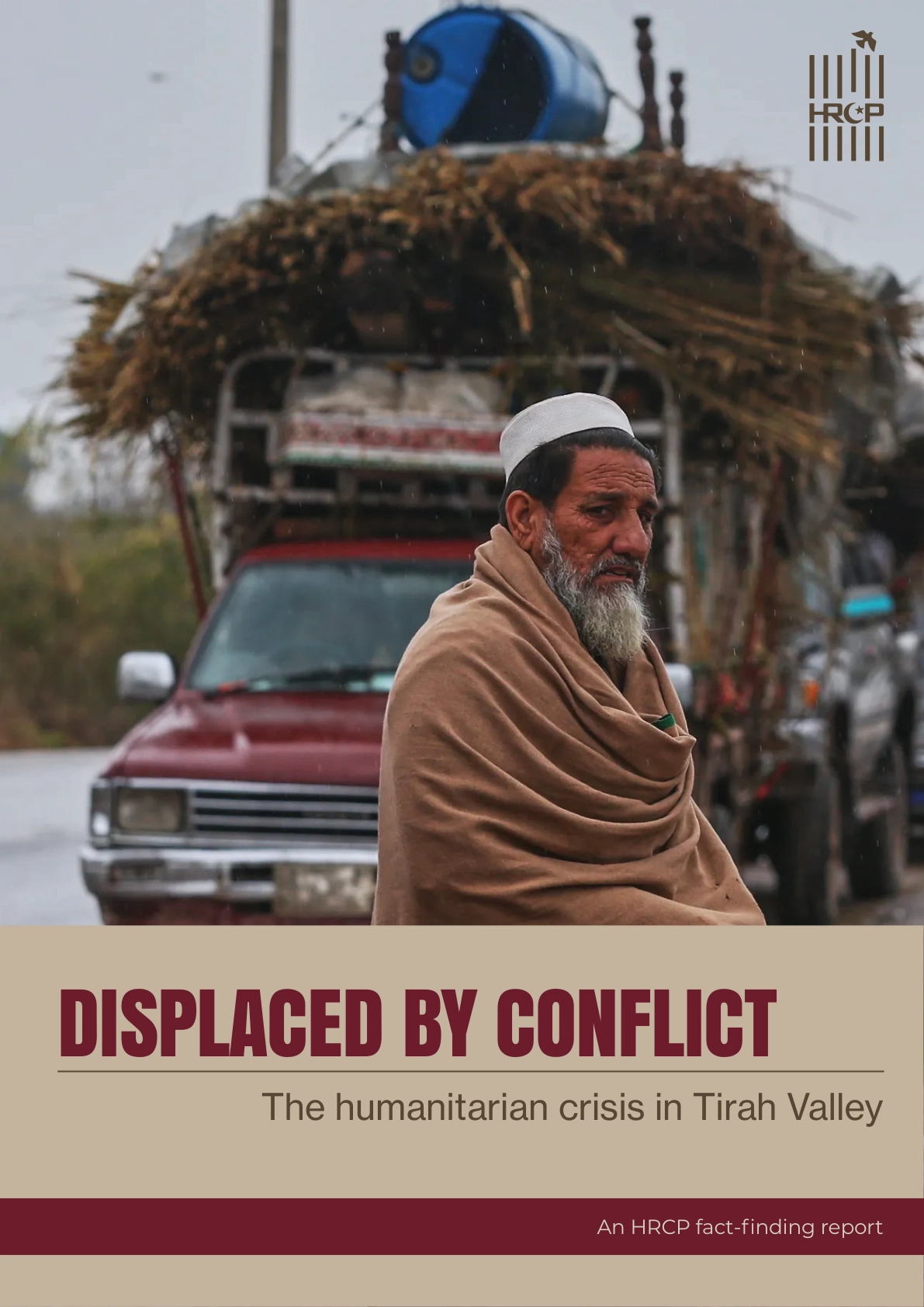
Displaced by Conflict: The Humanitarian Crisis in Tirah Valley
Policy Briefs and Reports

Displaced by Conflict: The Humanitarian Crisis in Tirah Valley

This report examines the humanitarian crisis caused by the displacement of residents from Tirah Valley, District Khyber, amid worsening insecurity and militant activity. HRCP documents the hardships faced by displaced families, including deaths, inadequate shelter and healthcare, disrupted education and livelihoods, and problems with registration and compensation. It calls for safe and dignified return, accountability for human rights violations, improved humanitarian assistance, and long-term rehabilitation and peacebuilding.

2026 English Policy Briefs and Reports Civil and Political Rights
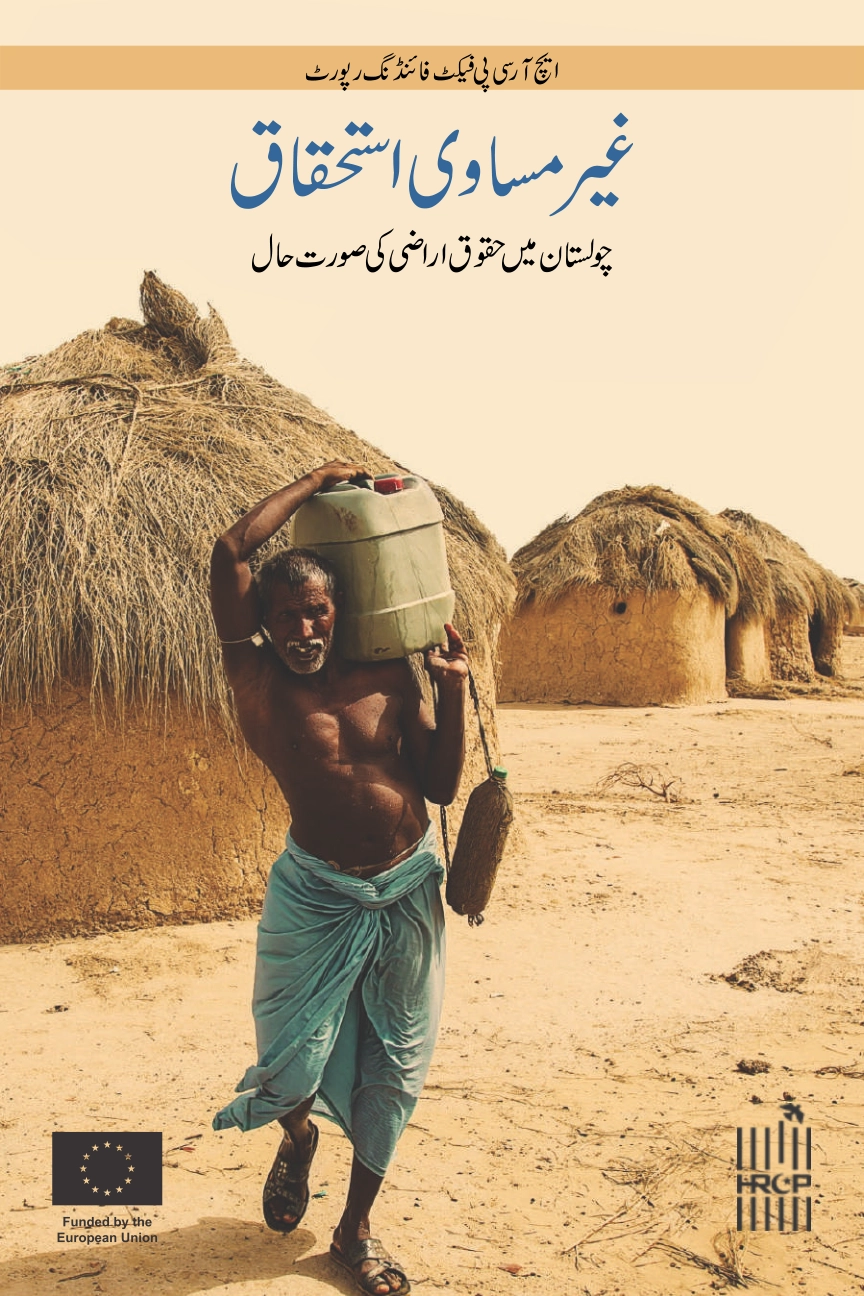
Unequal Claims: Land Rights in Cholistan
Policy Briefs and Reports

Unequal Claims: Land Rights in Cholistan

Unequal Claims: Land Rights in Cholistan examines land rights and land-allotment schemes in the Cholistan region of Punjab. The HRCP fact-finding report highlights unequal access to land, disputes over ownership and allocation, and the impact of government policies on local communities. It raises concerns about transparency, displacement, livelihoods, and the protection of residents’ land rights.

2025 Urdu Policy Briefs and Reports Civil and Political Rights
The Punjab Defamation Act (PDA) 2024
Other Publications

The Punjab Defamation Act (PDA) 2024

The report critically examines the Punjab Defamation Act 2024, focusing on its implications for freedom of expression, press freedom, fair trial rights, and democratic accountability. HRCP argues that the Act has an excessively broad scope because it extends the concept of broadcasting to social-media platforms and potentially treats bloggers, vloggers, and ordinary social-media users who create news content as journalists. The report also highlights concerns about the Act's vague definitions, severe financial penalties, procedural safeguards, and special tribunals. It notes that damages can begin at PKR 3 million and potentially reach PKR 30 million in punitive damages, alongside measures such as apologies and blocking or suspension of social-media accounts. Overall, HRCP concludes that the Act risks creating a chilling effect on journalism and public criticism, particularly criticism of public officials. The report records that the Act was challenged before the Lahore High Court on constitutional grounds, including freedom of speech under Article 19 and the right to fair trial under Article 10-A.

2025 English Other Publications Civil and Political Rights
Peaceful Assembly and Public Order Act 2024
Policy Briefs and Reports

Peaceful Assembly and Public Order Act 2024

The HRCP report examines the Peaceful Assembly and Public Order Act 2024 and argues that it places excessive restrictions on the constitutional right to peaceful assembly. It highlights concerns about prior permission requirements, restrictions on protest locations, broad powers to ban assemblies, and harsh penalties for violations. HRCP concludes that the Act could limit peaceful protest and freedom of expression and recommends amendments to better protect the right to peaceful assembly while maintaining public order.

2024 English Policy Briefs and Reports Civil and Political Rights